Dark Patterns — The 13 Tricks Apps Use on You Are Now Illegal in India
"Only 2 left!" (there are hundreds). A ₹99 delivery fee that appears at the last step. A donation pre-ticked in your cart. A subscription that took one tap to start and seventeen screens to cancel. These aren't sloppy design — they are dark patterns: interfaces engineered to make you spend more, share more, or stay subscribed against your intent.
In India, they are no longer just annoying — they're prohibited. The Central Consumer Protection Authority (CCPA) notified the Guidelines for Prevention and Regulation of Dark Patterns, 2023, naming 13 banned practices, and in June 2025 directed all e-commerce platforms to self-audit and eliminate them, following up through 2025-26 with notices to dozens of platforms. Penalties for misleading practices run to ₹10 lakh for a first offence and ₹50 lakh for repeats.
The 13 banned dark patterns — spot them by name
| Dark pattern | What it looks like |
|---|---|
| False urgency | Fake countdown timers, "only 1 left" stock lies |
| Basket sneaking | Items, insurance or donations added to your cart by default |
| Confirm shaming | "No thanks, I hate saving money" guilt buttons |
| Forced action | Must share contacts / buy a membership to complete a purchase |
| Subscription trap | One-tap signup, labyrinth cancellation |
| Interface interference | Bright "Accept all", hidden grey "Reject" |
| Bait and switch | Advertised item "unavailable", pricier substitute pushed |
| Drip pricing | Fees revealed step by step until checkout |
| Disguised advertisement | Ads styled as reviews, results or editorial content |
| Nagging | Endless popups repeating a request you declined |
| Trick wording | Double negatives engineered to confuse consent |
| SaaS billing | Silent auto-charges after free trials |
| Rogue malwares | Fake buttons/downloads that push malware or hidden charges |
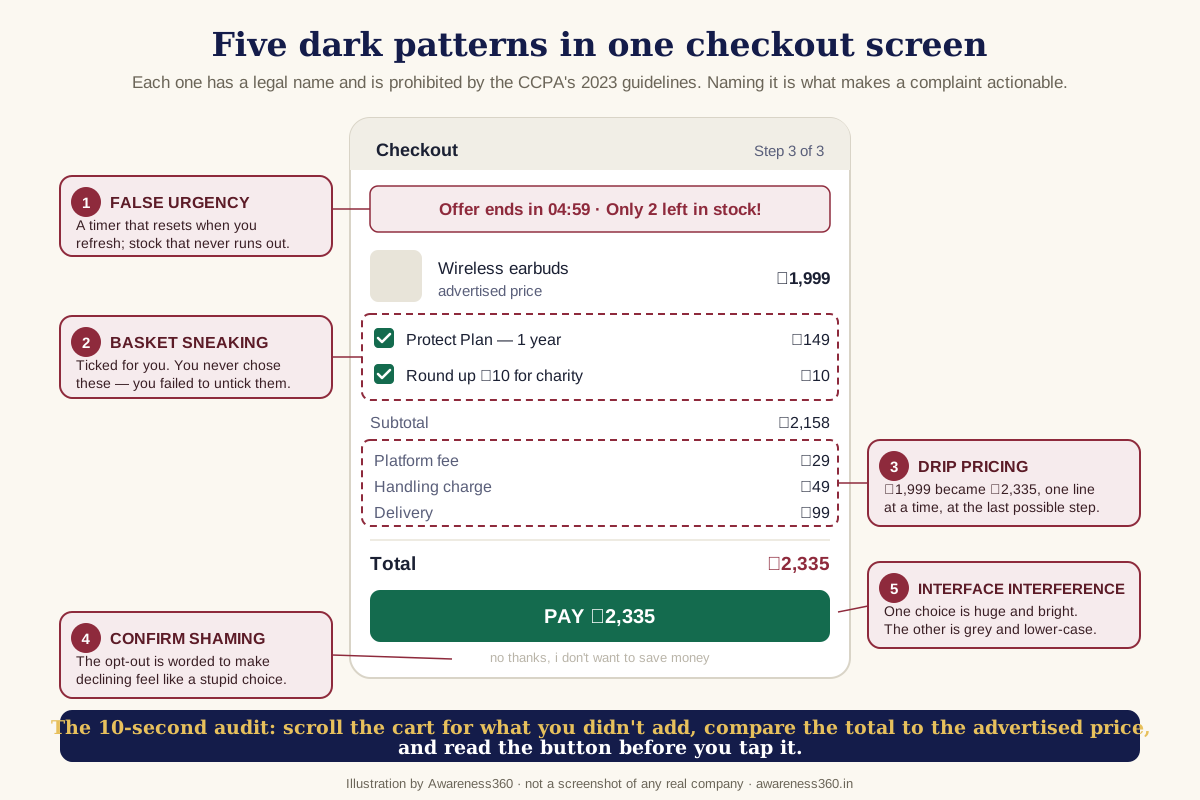
That is an illustration rather than any real store — but every element in it is one of the named practices, and they cluster like that in life because they compound:
- The timer buys the other four. False urgency exists to stop you reading the rest of the screen. Every other pattern on that page works better on someone who believes they have four minutes.
- ₹1,999 became ₹2,335 without a single price ever changing. Two pre-ticked add-ons and three fees disclosed one line at a time. Nothing was hidden, exactly — it was sequenced, so no single screen showed you the whole number until you had committed to the flow.
- Name them when you complain. "The website was confusing" is not actionable. "Drip pricing and basket sneaking, screenshots attached" maps onto the CCPA's own list, and that is what turns your complaint into a tagged entry in the enforcement pipeline.
Why this matters beyond irritation
Dark patterns quietly move money: sneaked add-ons across millions of carts, unnoticed post-trial charges, cancellations abandoned midway. Under the Consumer Protection Act framework, they are treated as unfair trade practices and misleading advertisements — which means you have remedies, not just frustration. Regulators have paired the 2025 self-audit advisory with a joint working group and enforcement notices; several major platforms publicly cleaned up checkout flows in response.
Your 4-step response when you catch one
- Screenshot immediately — the timer, the pre-ticked box, the fee that appeared at checkout. Dark patterns are easy to allege and easy to prove if you captured them.
- Reverse the damage: remove sneaked items before paying; for silent subscription charges, demand a refund in writing from the platform and simultaneously ask your bank to cancel the e-mandate (you can also manage UPI autopay mandates in your UPI app).
- Report it: call the National Consumer Helpline 1915 or file at consumerhelpline.gov.in naming the practice ("drip pricing", "subscription trap") — complaints tagged this way flow into the CCPA's enforcement pipeline.
- Escalate for your money: if you suffered a concrete loss and the platform won't remedy it, file at e-jagriti.gov.in, the platform that now carries consumer e-filing — our e-Daakhil guide walks through it. Claims up to ₹5 lakh carry no court fee.
Before paying on any app: scroll the cart for items you didn't add, compare the final amount with the advertised price, and read the button text you're about to tap. Ten seconds defeats ten designers.
Protect yourself by default
- Use UPI autopay / e-mandate dashboards in your payment apps to review every active subscription quarterly — silent renewals depend on you never looking.
- Treat free trials as billing events: set a phone reminder two days before every trial ends.
- Prefer "guest checkout" and deny contact/SMS permissions to shopping apps — forced data sharing is itself a listed dark pattern.
The subscription trap, specifically
This is the dark pattern that costs the most money over time, because it works by being forgotten rather than by fooling you once. It deserves its own drill.
Cancelling properly. Deleting the app does not cancel anything, and neither does uninstalling. Cancellation happens in whichever system took your money:
- Google Play / App Store subscriptions — cancel in the store's own subscriptions section, not in the app. This is where most "I cancelled and was still charged" cases come from.
- UPI autopay mandates — open your UPI app's autopay or mandate section, find the mandate, and revoke it there.
- Card-based standing instructions — cancel through your bank or card issuer's e-mandate dashboard as well as with the merchant.
- Direct merchant billing — cancel on the website and get written confirmation.
Cancel in the platform and revoke the mandate at your bank. Doing only one is the commonest reason charges keep appearing.
If you were charged after cancelling. Screenshot the cancellation confirmation and the subsequent debit, then demand a refund in writing from the merchant with a deadline. If they stall, this is a documented unfair trade practice — take it to 1915 and, for the money itself, to e-Daakhil. Do not simply dispute it with your bank and consider the matter closed; an undisputed mandate can keep drawing.
The audit worth doing today. Open your UPI app's mandate list and your app store's subscription list right now and read every line. Most people find at least one thing they forgot they were paying for — and the trap only works while nobody looks.
Frequently asked questions
Are dark patterns actually illegal in India, or just discouraged?
They are prohibited. The CCPA's 2023 guidelines name 13 specific practices, and they are treated as unfair trade practices and misleading advertisements under the consumer protection framework — with monetary penalties and enforcement notices, not merely guidance. That is what converts an annoying checkout into something you have a remedy against.
What can I actually get if I complain?
It depends on the harm. For a concrete loss — a sneaked add-on, a charge after cancellation, a fee never disclosed — you can seek a refund with interest, compensation and costs through the consumer commission. For manipulative design where you lost nothing, a complaint through 1915 still matters: it feeds the regulator's enforcement pipeline, which is what changes the platform's behaviour for everyone.
The item was "almost sold out" and clearly wasn't. Is that worth reporting?
Yes — that is false urgency, one of the named practices, and it is worth naming precisely in your complaint. Screenshot the claim together with proof it was untrue (the same listing still available days later). Individual reports look trivial; patterns across many reports are exactly what regulators act on.
I was charged after a free trial I forgot to cancel. Do I have a case?
Often, yes. The relevant questions are whether the trial's conversion to a paid subscription was clearly disclosed up front, whether you were given notice before the charge, and how difficult cancellation was made. Silent auto-charging after a trial is itself a listed practice. Demand the refund in writing first — many merchants refund at that stage rather than face a complaint.
How do I stop this happening again?
Two habits cover most of it. Do the 10-second checkout audit before every payment: scroll the cart for items you did not add, compare the final total against the advertised price, and read the button before tapping it. And review your autopay mandates and app-store subscriptions quarterly. Silent renewals depend entirely on nobody ever looking.
A platform is ignoring my complaint. Where do I go?
Escalate in order: the platform's grievance officer in writing, then the National Consumer Helpline on 1915 or consumerhelpline.gov.in, then e-Daakhil if you are out of pocket. Claims up to ₹5 lakh carry no court fee and you do not need a lawyer.
The bottom line
Design used to be the seller's home turf; now the 13 tricks have legal names and a regulator auditing for them. Learn the names, screenshot on sight, and use 1915 — every tagged complaint makes the manipulative checkout a little more expensive for the platform than the honest one. That's how the economics of dark patterns die.
How this guide is made
Written and fact-checked by the Awareness360 editorial team from primary sources — RBI, SEBI, IRDAI, the Income Tax Department and Government of India portals — with links to the originals in the text above. Last reviewed on 12 Aug 2026. This is general educational information for Indian readers, not professional financial, legal or tax advice.
Spotted something out of date? Tell us and we'll correct it — see our editorial policy.